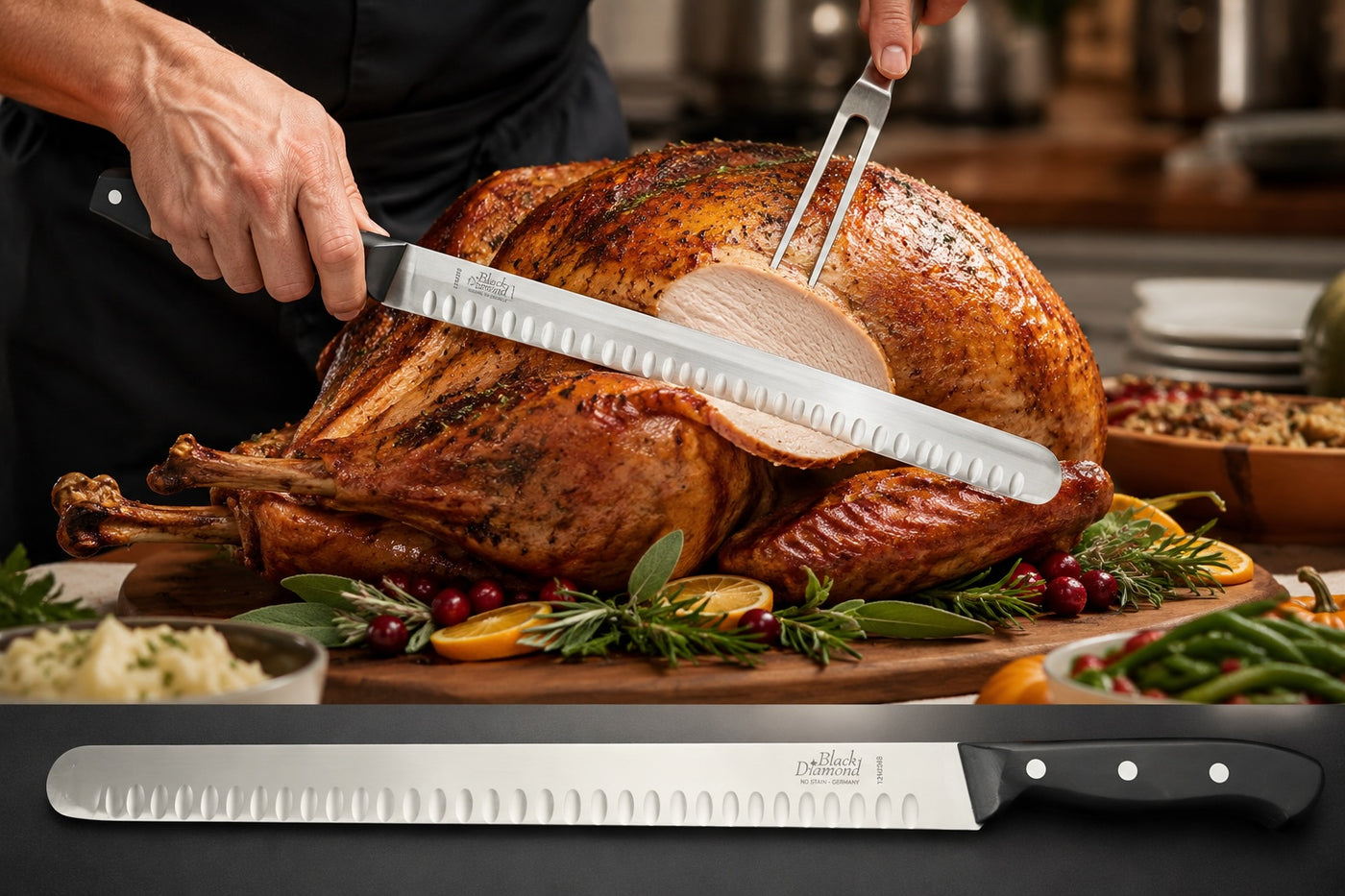
F.DICK Superior 8” Chef’s Knife
F.DICK Superior 8” Chef’s Knife is backordered and will ship as soon as it is back in stock.
Care information
Care information
Display general product information or specific product information using metafields.
Delivery and Shipping
Delivery and Shipping
Add some general information about your delivery and shipping policies.

F.DICK Superior 8” Chef’s Knife

Description
Description
F.DICK 8” Chef’s Knife
The F.DICK 8” Superior Chef’s Knife is a true all-purpose kitchen essential, designed for serious prep work at home or in a professional kitchen. With this 8-inch blade, this knife gives you the perfect weight and size to be the most important knife in your kitchen
Use it to dice, mince, chop, crush, slice, shred, and prepare meats, fish, poultry, vegetables, herbs, and more. The longer blade makes it especially useful when working with larger ingredients or when you need smooth, confident cutting power.
Built with a full tang for added strength and balance, this chef’s knife feels solid in the hand and is made for dependable everyday use. The strong, easy-to-hold handle provides a secure and comfortable grip, helping you work safely and efficiently.
8-Inch Chef’s Knives: How to Choose the Right Blade for Everyday Cooking — Commercial Investigation
Introduction: Why an 8-Inch Chef’s Knife Is a Versatile Everyday Choice
Selecting the right kitchen cutlery begins with a structured commercial investigation of design and materials. An 8-inch chef's knife is a versatile choice for everyday cutting, slicing, dicing, chopping, rocking cuts, and Asian-style chopping. By comparing Japanese versus German Steel and evaluating forged versus stamped construction, cooks can pinpoint the right balance of durability and precision. This guide reviews key blade specifications, bolster and handle ergonomics, routine care methods, and the differences between single knives and full cutlery sets.
What an 8-Inch Chef’s Knife Can Handle
In daily meal preparation, 8-inch chef's knives manage a wide array of prep work on the cutting board. The profile accommodates standard cutting, slicing, dicing, and chopping tasks across proteins and produce. The curve of the blade supports rhythmic rocking cuts through herbs and leafy greens, while the forward section and heel allow for push cuts and downward Asian-style chopping techniques. While standard chef’s knives are available from 6 to 12 inches, the 8-inch size remains the standard working standard across home and culinary settings.
8-Inch Chef’s Knives Compared With Other Chef’s Knife Lengths
Chef’s knives are produced in lengths ranging from 6 to 12 inches to serve different prep styles and hand sizes. Smaller 6-inch models offer a shorter profile suited for compact prep areas, whereas 10-inch and 12-inch versions provide extended cutting edges for processing large volumes of produce or large cuts of meat. Choosing an 8-inch format provides an even middle ground for everyday kitchen tasks, delivering sufficient reach for melons and squash without the unwieldy footprint of longer commercial blades.
Japanese vs. German Steel
Buyers evaluating kitchen cutlery will encounter two primary metallurgy traditions: Japanese versus German steel. German steel alloys are traditionally formulated with slightly lower carbon content and higher ductility. This metallurgic profile makes them durable, resistant to chipping when contacting bone, and forgiving during heavy chopping tasks. Conversely, Japanese steel alloys generally feature higher carbon formulations. This makes the metal harder, allowing manufacturers to grind the cutting edge to a narrower angle for precise, clean slicing. Deciding between Japanese versus German steel depends on whether the user prioritizes chip-resistant toughness or delicate, precise slicing.
Forged vs. Stamped Chef’s Knives
Another foundational decision point is forged versus stamped construction. Forged knives are crafted from a single heated bar of steel that is hammered or pressed into shape, resulting in continuous grain structure from the tip through the tang. Forged blades often feature integrated bolsters and added mass. In contrast, stamped knives are cut directly from sheets of uniform steel and heat-treated for temper. Evaluating forged versus stamped construction requires weighing weight preferences and balance: forged models offer solid heft and an integrated transition to the handle, while stamped models focus on lightweight utility.
Blade Features That Affect Cutting Performance
Evaluating a kitchen knife requires assessing how technical specifications function together during daily food prep. Blade hardness, blade thickness, Edge performance, and blade face geometry directly dictate how cleanly a tool parts food fibers and how long it holds an edge under continuous use.
Hardness, Blade Thickness, and Edge Performance
Hardness ratings define how well steel resists abrasion and edge rolling. For example, German-style blades frequently measure around 56 Rockwell hardness or 58 HRC hardness, offering a balance between resilience and ease of maintenance. Japanese blades often reach higher numbers on the scale. Blade thickness is equally influential; a thin 2.5 mm blade creates less wedging resistance when moving through dense root vegetables than a thicker stock. Grind geometry governs edge performance, such as a 15° double bevel or a precision-honed V-edge, both of which deliver clean slicing when paired with the right blade hardness.
When Dimples Help With Sticky Foods
Certain chef's knives feature shallow indentations along the blade face, commonly referred to as a granton edge or dimples. These depressions introduce small pockets of air between the steel surface and the ingredient being cut. Dimples help a blade glide smoothly through sticky foods, preventing dense slices of potatoes, apples, and summer squash from vacuum-sealing against the side of the blade during continuous prep.
Bolsters, Handles, and Balance
Beyond the steel itself, the junction between blade and grip determines handling comfort:
-
Bolster design: A full bolster extends all the way down to the heel of the blade, providing finger protection and forward weight, though it requires specific sharpening techniques. A curved bolster provides an ergonomic transition that encourages a secure pinch grip while leaving the entire cutting edge exposed for easier maintenance.
-
Handle construction: Traditional grips use a triple-riveted handle with stainless steel rivets to secure polymer, composite, or wood scales to a full tang. Alternatively, molded grips, such as a slip-resistant Fibrox handle, emphasize hygiene, light weight, and a textured grip during wet tasks.
-
Balance: Proper balance distributes mass evenly across the pivot point where the handle meets the bolster, preventing wrist strain during extended cutting sessions.
Care for an 8-Inch Chef’s Knife
Preserving cutting performance requires regular maintenance based on three core practices: regular honing, thorough hand washing, and Safe storage:
-
Honing: Use a honing steel periodically to realign the microscopic teeth of the edge without removing base metal.
-
Hand Washing: Wash knives by hand immediately after use with warm water and mild soap. Avoid automatic dishwashers, where harsh detergents and water jets can degrade handle rivets and dull fine edges.
-
Safe Storage: Practice safe storage by housing blades in an in-drawer tray, on a magnetic strip, or inside wooden blocks to keep the cutting bevel shielded from abrasive contact with other metal cutlery.
Individual Chef’s Knives vs. Professional Knife Sets
When purchasing kitchen cutlery, buyers must weigh buying a single chef’s knife against selecting a professional knife set. An individual 8-inch blade allows cooks to invest their entire budget into one high-grade, everyday tool matched specifically to their hand. In contrast, multi-piece sets provide a coordinated collection of tools for varied tasks.
What to Compare in a Professional Knife Set
When conducting a commercial investigation of knife sets, compare the options using this checklist:
-
Value: Ensure the set offers cost savings relative to buying the constituent pieces separately.
-
Materials: Confirm that all included blades share the same quality steel and handle materials.
-
Construction: Verify whether the collection uses forged versus stamped construction across all pieces.
-
Balance: Check that utility, pairing, and bread knives maintain consistent balance alongside the main chef's knife.
-
Edge Performance: Ensure edge grinds and factory sharpness are uniform throughout the line.
-
Included Tools: Evaluate the practicality of included tools, such as kitchen shears, honing steels, and storage blocks, avoiding sets padded with redundant blade shapes.
Conclusion
An 8-inch chef's knife provides the balance, length, and adaptability required for routine kitchen cutting tasks, from rocking cuts to Asian-style chopping. By evaluating Japanese versus German steel, forged versus stamped construction, blade hardness, and bolster styles, buyers can identify a tool built to match their cutting habits. The next step is to assess your prep routine, determine whether an individual knife or full set fits your needs, and review specific blade profiles to finalize your purchase.
FAQs
Why is an 8-inch chef's knife preferred over 6-inch or 10-inch models?
While chef's knives range from 6 to 12 inches, an 8-inch blade offers the optimal balance between cutting surface and board control, providing enough length for large squash while remaining maneuverable for fine dicing.
How does Japanese versus German steel affect knife maintenance?
German steel is softer, often rating at 56 Rockwell hardness or 58 HRC hardness, which resists chipping and is easy to sharpen. Japanese steel is harder, holding a refined 15° double bevel longer but requiring careful handling to prevent chipping.
What are the benefits of dimples on a chef’s knife blade?
Dimples create air pockets between the food and the steel, preventing dense, starchy, or moist ingredients like potatoes, apples, and summer squash from sticking to the knife face during prep.
How should I store my 8-inch chef's knife for safety and edge retention?
Safe storage requires keeping the blade in a dedicated wooden block, on a wall-mounted magnetic rack, or inside a protective sheath to prevent the edge from striking other utensils.
Image Alt Texts
-
Featured Image: Commercial investigation comparing 8-inch chef's knives on a wooden cutting board.
-
Blade Performance Image: Close-up of 8-inch chef's knife edge showing 15-degree double bevel grind and dimples.
-
Bolster and Handle Image: Detailed view of a triple-riveted handle and curved bolster on a forged kitchen knife.
Payment & Security
Payment methods
Your payment information is processed securely. We do not store credit card details nor have access to your credit card information.